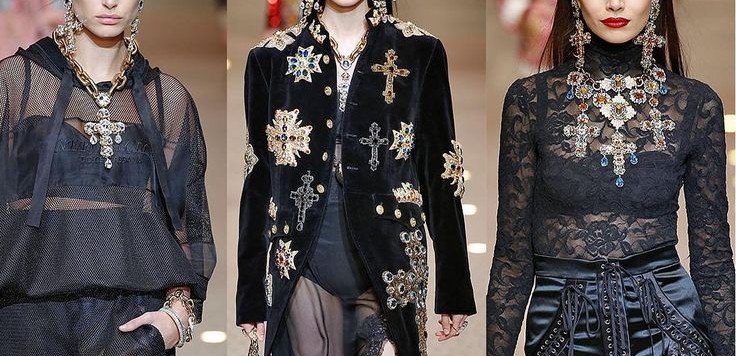
Cross Iconography in Religious and Fashion Cultures
An Analysis of Symbolism Across Christianity and Gothic Fashion
Introduction
The iconography of a cross in religion and fashion is a multifaceted symbol that captures spirituality and contemporary style across a vast network of people. The first introduction of the use of crosses dates back to the first century CE, the Common Era, in Jerusalem, when the Romans performed Roman crucifixion practices as a form of execution.
In the present day, crosses are seen throughout the fashion industry, from jewelry to clothing, and used in religious contexts, from ritual practices to a symbol of faith. The cross symbol in these two cultures has spread globally as the fashion industry impacts cultures across nations, and religion has had a historical impact since the first century CE.
This research explores how Gothic fashion and Christianity use cross iconography in different ways while maintaining a slight overlap of similarities, examining the cultural significance, historical context, and contemporary interpretations of this powerful symbol.
Historical Timeline
Roman crucifixion practices established in Jerusalem. The word "crucifixion" derives from Latin 'crux' (cross) and 'figere' (to fasten). Romans used wooden crosses as a form of execution, with victims having their arms stretched horizontally and feet nailed vertically to the beam.
The crucifixion of Jesus Christ transformed the cross from an instrument of torture to a symbol of divine love and sacrifice. Biblical references in Galatians 3:13 and John 17:3 established the cross as a symbol of redemption and eternal life for believers.
Philosopher Tertullian identified Christians as "devotees of the cross," prompting followers to wear wooden crosses on narrow leather bands around their necks. This practice established the tradition of visible cross-wearing that continues today among popes, cardinals, bishops, and the Christian community.
Goth subculture emerged with dark aesthetics influencing music, fashion, and lifestyle. Inspired by punk and literary Romanticism, Gothic fashion began incorporating cross iconography in challenging ways, emphasizing individualism, acceptance, and themes of pain and suffering.
Cross iconography appears across both religious and fashion contexts globally. The symbol continues to hold deep spiritual meaning while simultaneously serving as a fashion statement, creating ongoing dialogue about cultural appropriation and artistic expression.
Christianity Culture
Religious Significance
In Christianity, the cross symbol represents the crucifixion of Jesus Christ by the Romans. The wooden beams initially used for execution became a beacon of Christ's love for his followers and humankind. The Church Institute uses crosses and crucifixes as reminders of Christ's sacrifice, believing that his resurrection three days later signified eternal life in heaven.
Christianity's culture is structured by the institution of the church and its followers, who believe the cross used in the Crucifixion keeps their faith alive. The symbol represents the belief that when Christ returns to earth, it will mark the end of time.
Fashion & Display
Around the second century AD, Christians began wearing crosses visibly as devotional symbols. Today, popes, cardinals, bishops, and the broader Christian community continue wearing cross pendants and crucifixes as public declarations of faith. This tradition bridges religious devotion and personal fashion, making the cross both a spiritual symbol and an aesthetic choice.
Gothic Fashion Culture
Origins & Aesthetic
Goth emerged in the late 1970s with dark aesthetics that influenced music, fashion, and overall lifestyle, inspired by subcultures such as punk. The culture's dedication to individualism, acceptance, and shared interests in themes of pain and suffering defines how it uses Christian iconography in challenging ways.
Gothic fashion appeared around the same time as the literary Romanticism period, and the two seemed to connect as Romanticism also centered on ideas of individualism, themes of death, and other dark topics. Both Gothic culture and Romanticism were rooted in curiosity about religion, as the Age of Enlightenment—which emphasized intellectual and philosophical thinking—influenced or provoked responses from these movements.
Cross Symbolism in Goth
In Gothic fashion, crosses are typically used in opposing ways: either to defy religion or to provide aesthetic pleasure. The culture within Gothic fashion is structured by the community, music, films, and literature that influenced the development of the goth scene over decades.
Common Misconception
There is a widespread belief that Gothic fashion uses crosses only in an anti-Christ or rebellious way. However, many goths also wear crosses to honor their religion. An individual can be both goth and religious—goth culture is not bounded by religion. In this culture, cross iconography is used with both honor and defiance.
Gothic culture uses cross iconography both as aesthetic expression and religious devotion. The symbol serves multiple purposes: challenging religious norms, expressing personal style, and sometimes honoring faith traditions. This complexity demonstrates the nuanced relationship between fashion, identity, and spirituality.
Comparative Analysis
| Aspect | Christianity | Gothic Fashion |
|---|---|---|
| Primary Purpose | Symbol of faith, sacrifice, and redemption | Aesthetic expression, individualism, sometimes defiance |
| Cultural Structure | Organized through church institutions and religious doctrine | Community-driven through music, literature, and shared interests |
| Historical Foundation | 1st century CE crucifixion of Jesus Christ | Late 1970s punk and Romanticism influences |
| Display Methods | Pendants, crucifixes, church architecture | Jewelry, clothing prints, accessories |
| Meaning | Divine love, eternal life, spiritual devotion | Multiple: rebellion, aesthetic, personal faith, or combination |
| Common Ground | Both cultures use crosses as visible symbols of identity and can coexist within the same individual | |
Key Findings
Historical Transformation
The cross evolved from a Roman execution device to a universal symbol of faith, demonstrating how context dramatically reshapes meaning over time.
Dual Interpretation
A single symbol can simultaneously represent devotion and defiance, spirituality and style, tradition and rebellion—depending on cultural context.
Cultural Overlap
Gothic fashion and Christianity are not mutually exclusive. Individuals can participate in both cultures, wearing crosses for multiple reasons simultaneously.
Identity Expression
Both cultures use cross iconography as a visible marker of identity, community belonging, and personal values—whether spiritual or aesthetic.
Artistic Freedom
The tension between religious symbolism and artistic expression continues in contemporary culture, raising questions about appropriation, respect, and creative freedom.
Global Impact
Cross iconography has spread globally through both religious missionary work and fashion industry influence, making it one of the world's most recognized symbols.
Personal Reflection
Researcher's Perspective
Growing up Catholic, I was deeply immersed in Christian symbolism. I attended CCD (Confraternity of Christian Doctrine) every Sunday and saw crosses everywhere—from inside churches to the twenty-five crosses nailed into my grandparents' walls. As a child, I wore a cross ring to represent my faith, but once I became agnostic, I stopped wearing it because it felt wrong to wear a symbol of faith without being religious.
My younger brother, also not religious, was gifted a cross necklace by our Catholic grandparents. To this day, he wears it for aesthetic pleasure rather than religious connotation. This personal experience highlights the complex relationship people have with religious symbols in contemporary society.
Due to my Catholic upbringing, I initially believed that crosses were reserved for religion, not fashion. Goth subculture appeared demonic to me—likely tied to my religious bias. I grouped goth, punk, and emo into one community, even though they represent distinct subcultures with different characteristics and values.
This research challenged my preconceptions. The cross symbol is used in the art world as a form of expression, whether in Gothic fashion or controversial works like Andres Serrano's "Piss Christ." The line between expression and offense is often blurred in art. Cultures connect, mix, and sometimes offend one another while staying true to themselves.
Through this analysis, I learned that symbols can hold multiple meanings simultaneously, and individuals have the right to interpret and use iconography in ways that feel authentic to their own identity—even when those uses challenge traditional interpretations.
Conclusion
Gothic fashion and Christianity are often assumed to be opposites on the similarity spectrum. However, both cultures use cross iconography—whether crucifixes hang around necks or crosses are printed on jeans. Their use of cross imagery represents the history and values of their respective cultures.
The symbol has transformed over the years but keeps its core significance through the strong sense of community both cultures maintain. There has been ongoing argument against the use of crosses in the fashion world, appearing most prominently in discussions of goth and Christianity. Even high fashion has faced criticism for cross usage, proving that controversy isn't targeted solely at the Gothic community but rather at the broader art world's use of religious symbolism.
Ultimately, cross iconography demonstrates how symbols evolve, adapt, and maintain relevance across vastly different cultural contexts. The cross serves as a reminder that meaning is not fixed—it is created and recreated by the communities that use it, whether for devotion, defiance, or aesthetic expression.
Research Methodology
This analysis drew from multiple sources including:
- Biblical texts and theological scholarship
- Historical research on Roman crucifixion practices
- Fashion and subculture studies
- Literary analysis of Romanticism and Gothic movements
- Personal ethnographic reflection
Skills & Tools Used
References
Bagthaliya, R. B. (2024, January 10). A Study of "The Gothic Elements in Romantic Literature" With A Focus on Mary Shelley and Edgar Allan Poe's Works. VidhyayanaeJournal. https://j.vidhyayanaejournal.org/index.php/journal/article/download/1011/1112/4103
English Standard Version Bible. (2016). ESV Online. https://www.bible.com/
Fangonilo, L. (2021, October 5). The history of the Crucifix Necklace. Oliver Cabell. https://olivercabell.com/blogs/helpful-hints/the-history-of-the-crucifix-necklace
Latham, R. (2014). Goths and God: Theological Reflections on a Subculture. Practical Theology, 7(4), 280–292. https://doi.org/10.1179/1756073X14Z.00000000047
Marshall, B. M. (2015, January 22). Romanticism and/or/versus the Gothic. Gothic v. Romanticism. https://faculty.uml.edu/bmarshall/romanticismandgothicartlit.html
Nally, C. (2020, April 27). Goth. Museum of Youth Culture. https://www.museumofyouthculture.com/goth/
Shisley, S. (2024, January 25). Jesus and the Cross. Biblical Archaeology Society. https://www.biblicalarchaeology.org/daily/biblical-topics/crucifixion/jesus-and-the-cross/
Vocabulary.com. (n.d.). Crucifixion. In Vocabulary.com Dictionary. Retrieved October 28, 2024, from https://www.vocabulary.com/dictionary/crucifixion