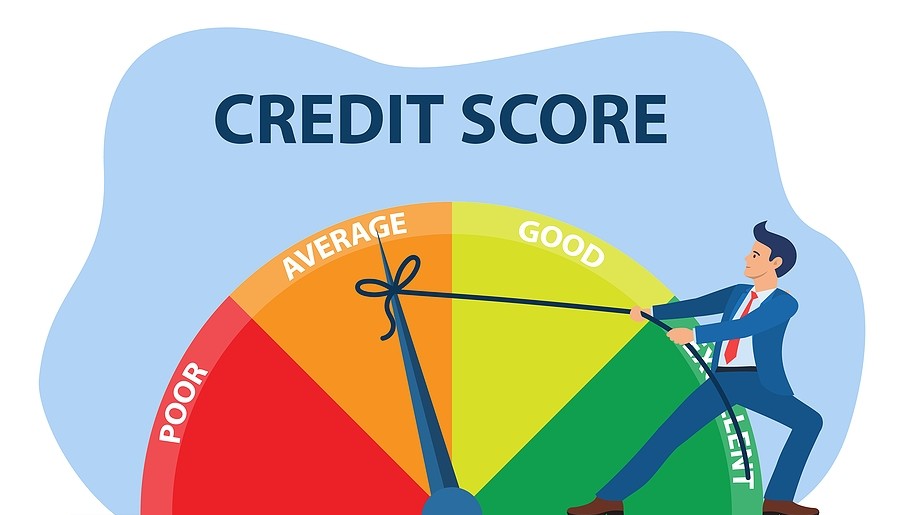
Building Your Credit Score as a College Student
Course Overview
The Moodle course "Building Your Credit Score as a College Student" was created to provide college students with a comprehensive guide on how to start building their credit score and what they need to know before they begin. Many high schools do not provide financial literacy courses that cover this topic, so when students enter college, they never gain the proper knowledge of credit.
This self-paced online course addresses a critical gap in financial education, empowering students to make informed decisions about credit cards, loans, and long-term financial health.
Course Modules
Complete Course Structure
Module 1-4: Foundation & Concepts
Introduction to credit scores, how they work, factors that affect them, and why they matter for college students.
Module 5: Responsible Credit Card Use
Practical guidance on how to use a credit card responsibly, including payment strategies and avoiding common pitfalls.
Module 6: Do's and Don'ts
Clear guidelines on best practices and behaviors to avoid when building credit.
Module 7: External Resources
Curated links to reputable financial resources, credit monitoring tools, and additional learning materials.
Module 8: FAQ Forum
Frequently asked questions addressing common student concerns about credit building.
Module 9: Final Comprehension Check
Comprehensive examination testing knowledge retention across all modules.
Course Screenshots
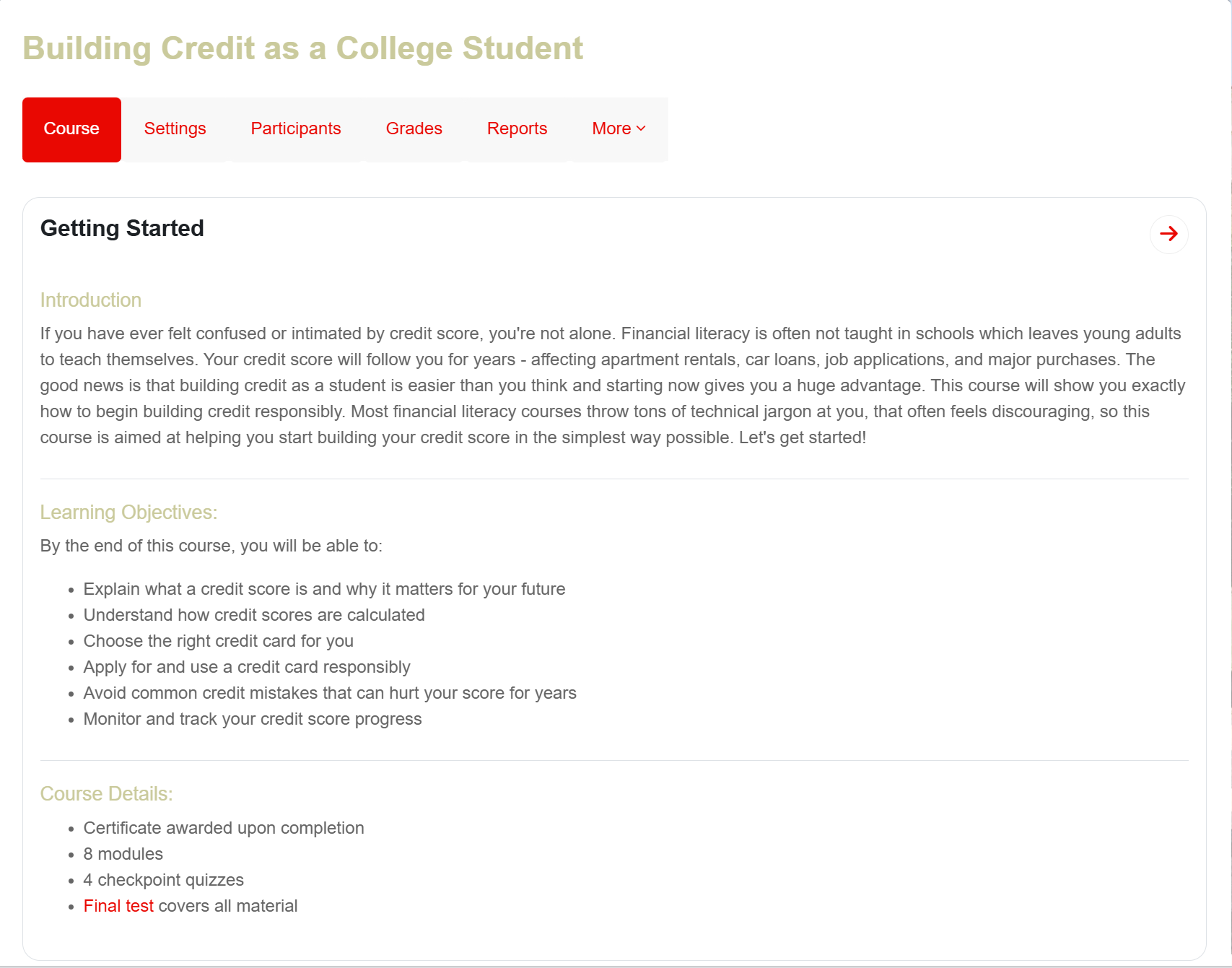
Course Introduction
Welcome page with learning objectives and course overview
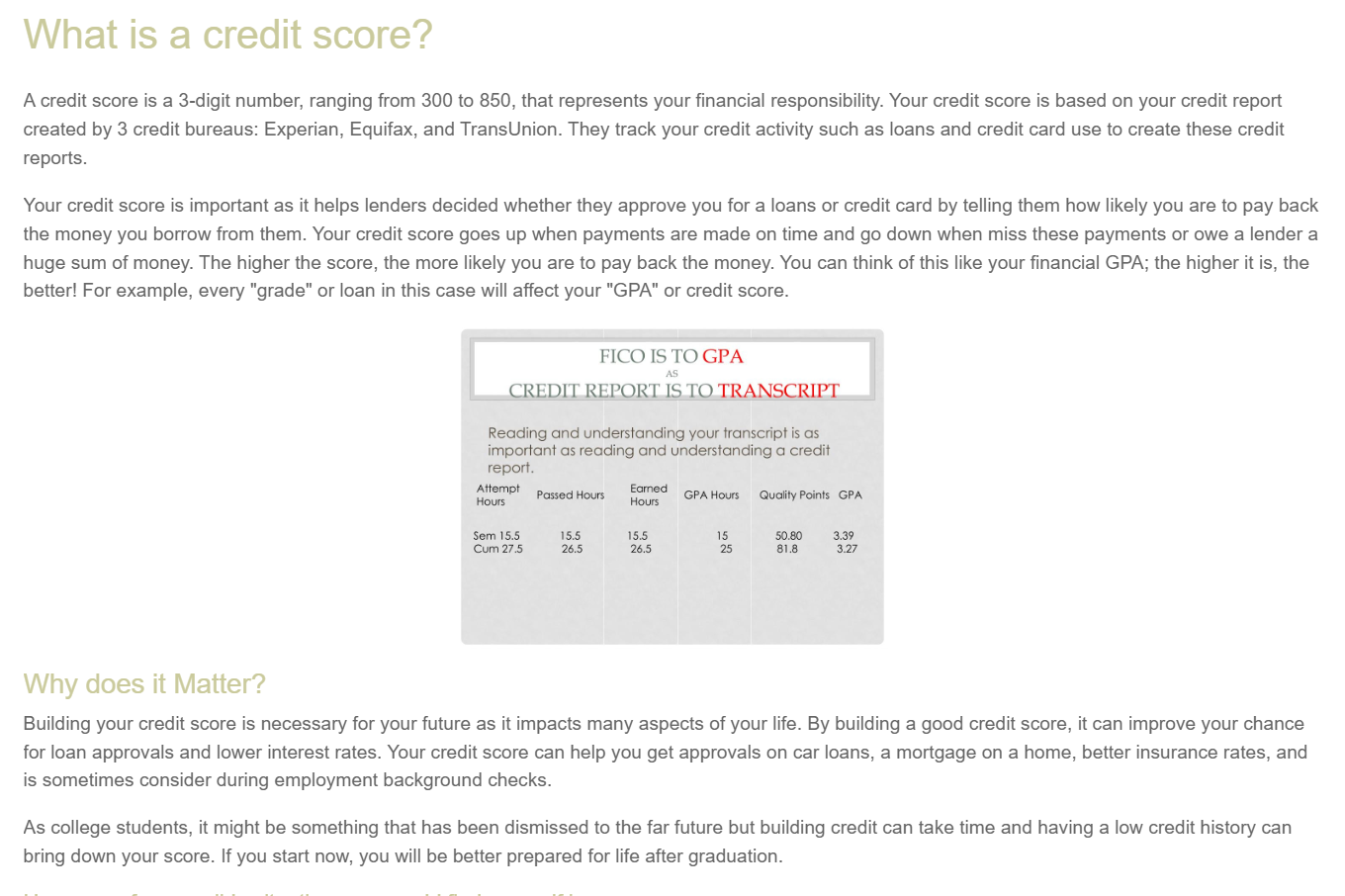
Module Content
Educational content with clear explanations and examples
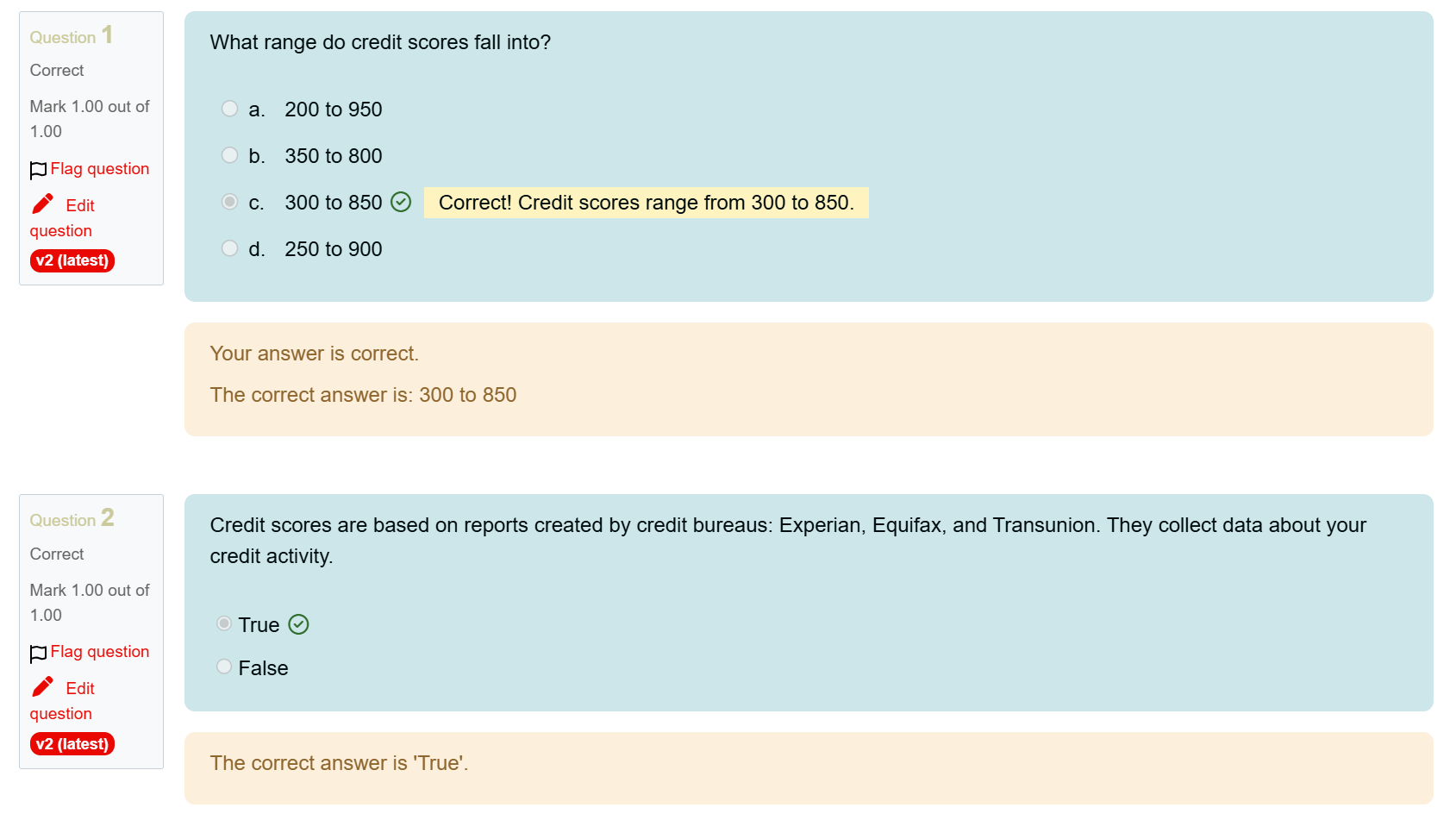
Checkpoint Quiz
Interactive quizzes to reinforce learning
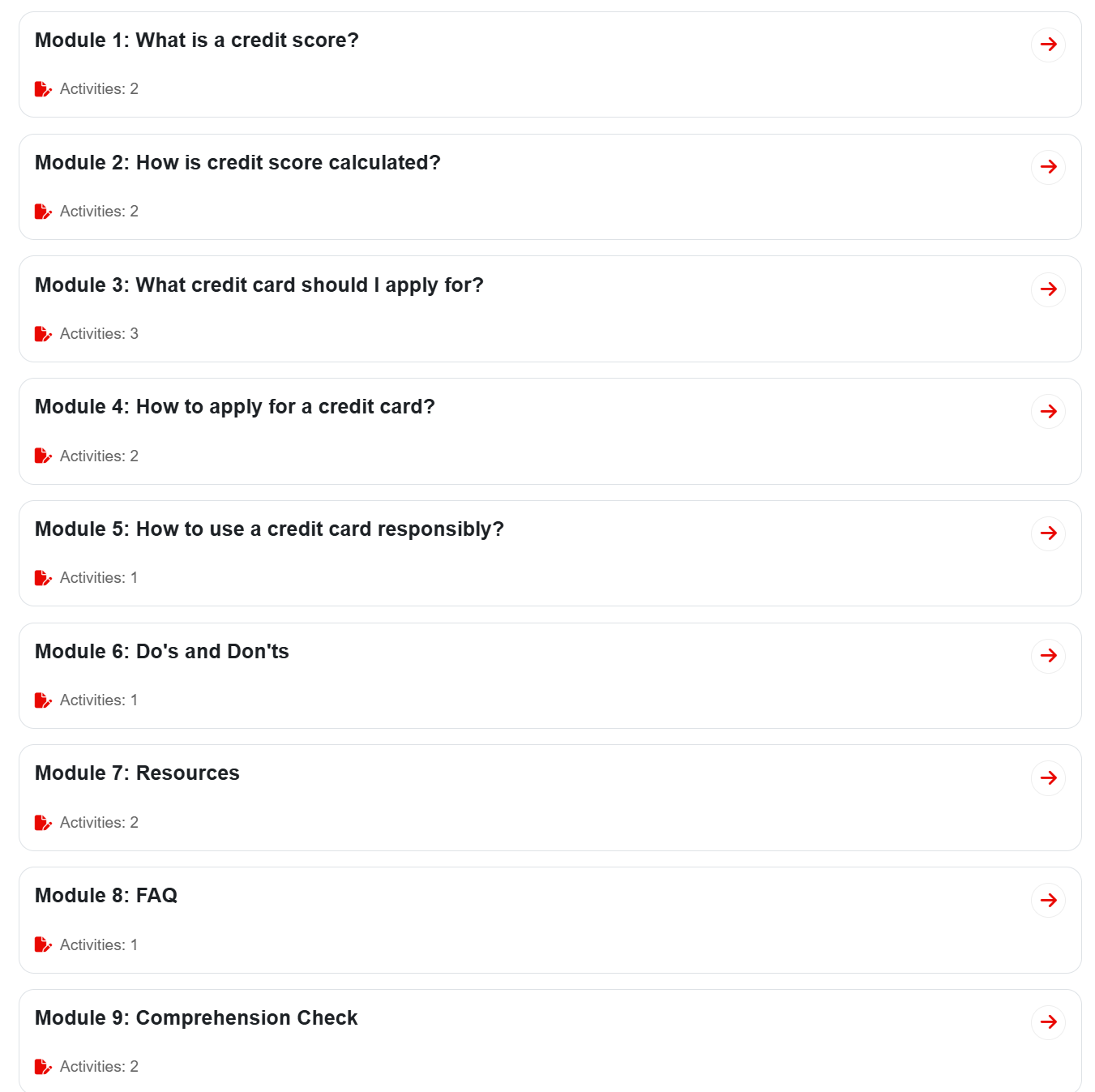
Course Navigation
Side navigation and progress tracking
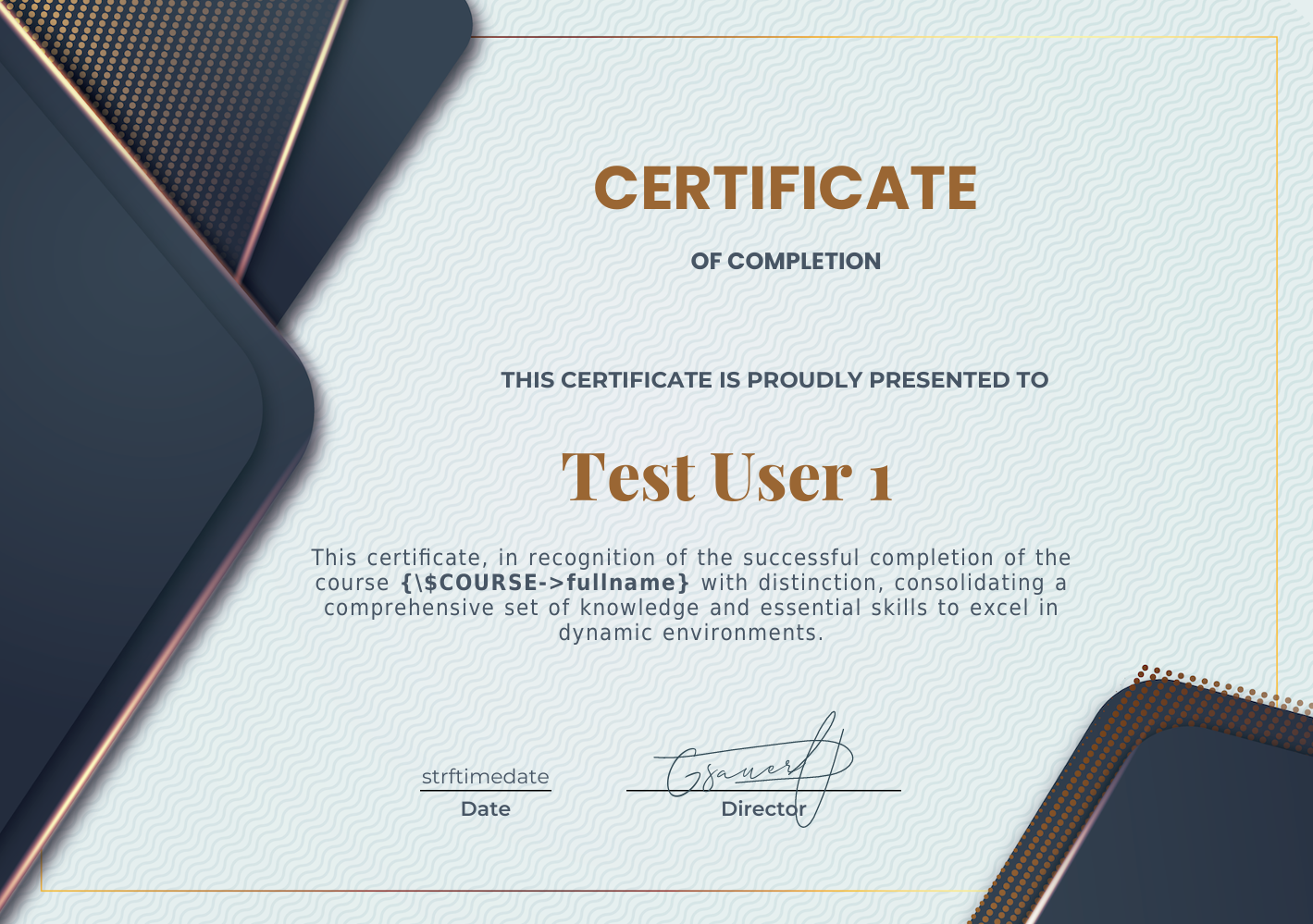
Course Completion
Final exam and course completion certificate
Usability Testing
A comprehensive usability test was conducted on November 25, 2025, with three college students aged 18-21 to evaluate the course's navigation, content comprehension, and engagement. Each session lasted 50 minutes to an hour, with participants completing all 9 modules from start to finish.
Test Participants
| Participant | Age | Year | Has Credit Card? | Self-Rated Knowledge (1-10) |
|---|---|---|---|---|
| P1 | 19 | Freshman | Yes | 6 |
| P2 | 18 | Freshman | No | 1 |
| P3 | 21 | Senior | No | 2 |
Key Findings
- 100% Agreement: Content was clear, increased confidence in knowledge, would recommend to others, quizzes were helpful, information was easily findable
- Navigation Challenges: Only 0% strongly agreed navigation was easy (average 2.6/5)
- Engagement Issues: Only ~33% found the course engaging (average 3.3/5)
- Time Decrease: Completion time significantly dropped in modules 5-9 (from 5-8 minutes to 1 minute or less)
- Content Quality: All participants reported feeling more confident in their knowledge after completion
User Quotes
"The lack of appeal in the visual design was mentioned a few times... the course needs more colors, pictures, and graphics to generate interest in the audience."
Recommendations & Improvements
Navigation Enhancement
Redesign course interface to include "next" and "back" buttons. Users relied heavily on side navigation bar and struggled to move between modules efficiently.
Content Accuracy
Conduct in-depth copyedit to fix spelling errors and incorrect information displayed in course introduction (e.g., module count discrepancy).
Engagement Enhancement
Implement video explanations, matching games for glossary terms, interactive lessons, and expand content in modules 5-9 to maintain engagement throughout.
Content Balance
Reduce redundancy in later modules and provide more detailed information in modules 5-9 to match the depth of earlier modules.
Visual Design
Redesign with more colors, images, and graphics to generate interest. Current structure relies too heavily on text and tables.
Multimedia Integration
Add videos, infographics, and interactive elements to break up text-heavy sections and accommodate different learning styles.
Full Usability Test Report
Download the complete usability test report for detailed findings, methodology, and recommendations.
Download Full Report (PDF)Project Impact
Despite identified areas for improvement, the course successfully achieved its primary objectives:
- Knowledge Transfer: 100% of participants reported increased confidence in their credit score knowledge
- Recommendation Rate: All participants would recommend the course to other students
- Content Clarity: Information was presented clearly and was easily accessible
- Educational Value: Checkpoint quizzes effectively reinforced learning
- Target Audience Fit: Successfully tailored content for college students with little to no credit knowledge