Redesigning Agricultural Education
A UX Approach to Vertical Farming Awareness Case Study
June 2024
Introduction
The world faces an unprecedented food crisis driven by conflicts in the economy and climate extremes. This leads to an estimated 2.3 billion people lacking access to sufficient, safe, and nutritious food for a healthy life. Seasonal crops prevent consumers from receiving the best-quality produce all year round. However, the adoption of vertical farming in urban areas aims to solve environmental and food security issues.
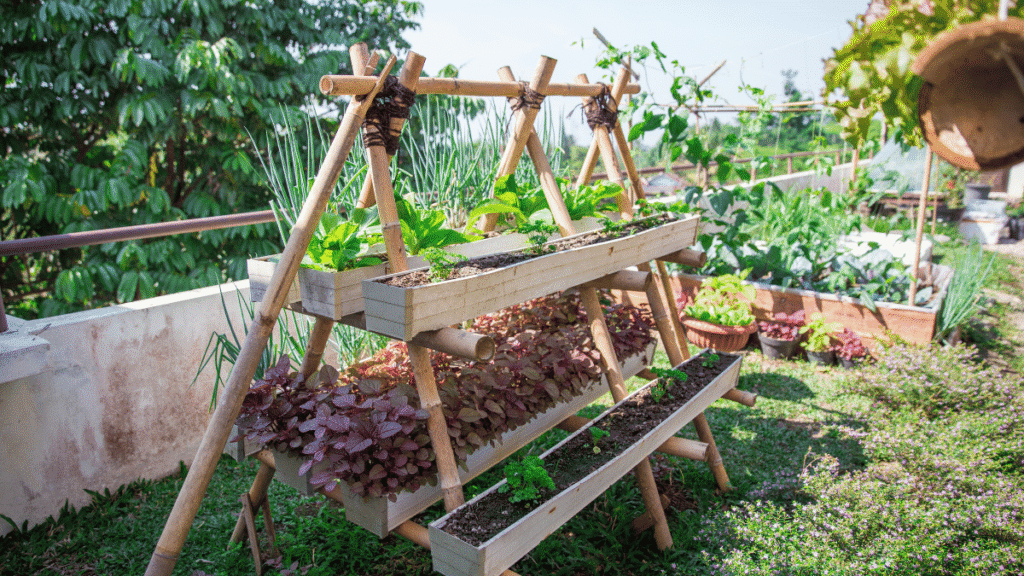
Vertical farming is an indoor farming system that uses artificial development techniques like hydroponics, aquaponics, and other approaches in soilless agriculture. The implementation of vertical farming in urban areas not only presents a sustainable solution to the global food crisis but also opens a host of economic opportunities. This innovative farming system requires less rural land, is less susceptible to pathogen contamination, and could lead to job creation. Furthermore, it offers the potential for year-round production, reduced water usage, and the ability to grow crops closer to the point of consumption.
The Issue
Vertical farming could solve food security and environmental issues, but public awareness is minimal. Survey data showed that 50% of participants had never heard of vertical farming, and those who had couldn't explain how it works or its benefits.
User Research: Personas & Journey Maps
Persona #1: David Martinez
David Martinez
Occupation: Urban Policymaker
Education: Master's degree in urban education
Salary: $83,505
Location: Austin, Texas
Tech Comfort: Moderate
- Uses few social media apps
- Relies on computers over mobile
- Mainly uses tech for work
Goals and Motivations
Address food deserts
Pain Points and Challenges
Budget constraints, zoning issues
Needs
Return on Investment (ROI) data
| Stages | Awareness | Research | Consideration | Planning |
|---|---|---|---|---|
| Actions | Hears about VF at a meeting. Quick Google search. | Read numerous articles. | Discuss with financial advisors. Run cost calculations. | Create proposal. Set stakeholders meeting. |
| Thoughts & Feelings | "Sounds interesting, but is this realistic? This could solve the issues in our food desert areas." Hopeful and curious, but skeptical. | "This is a lot of information to sift through." Overwhelmed. | "Is this possible for us financially? Not my area of expertise." Concerned about zoning constraints and financing. | Motivated. Purpose driven. |
| Questions | What is Vertical Farming? | How many urban areas have implemented VF? How does it work? | What does it cost? What is the ROI? | How can I raise support? Where can we find funding for VF? |
Pain Points:
Information jargon creates immediate confusion for user.
Opportunities:
Search results could lead to educational video overview of Vertical Farming.
Persona #2: William Davis
William Davis
Occupation: Entrepreneur
Education: Bachelor's degree in entrepreneurship
Salary: $70,569
Location: Fort Worth, Texas
Tech Comfort: High
Goals and Motivations
Understanding startup costs
Pain Points and Challenges
Risk assessment
Needs
Financial projections
| Stages | Awareness | Research | Consideration | Planning |
|---|---|---|---|---|
| Actions | Discover vertical farming when listening to a podcast. | Quick YouTube Search. | Attempt to calculate the costs. Search for suppliers. | Contact urban planning department. |
| Thoughts & Feelings | "This sounds like a great business idea." Intrigued. | Confused by the technical jargon. | Financially concerned. "Can I get the community on board?" | |
| Questions | How can I make this into a start up? Is there a market for vertical farms? | What would be the startup cost? How can I build this? | Do I need certifications? Do I need city permission and zoning certificates? |
Pain Points:
Unsure where to begin in creating a vertical farm. Worried there will be no return on investment.
Opportunities:
Include supply and cost information for both small and large vertical farms.
Persona #3: Sara Miller
Sara Miller
Occupation: Elementary School Teacher
Education: Bachelor's degree in education
Salary: $45,450
Location: East Austin, Texas (food desert)
30-minute drive to nearest fresh produce grocery store
Tech Comfort: High
- Uses many social media apps
- Comfortable with online learning
Goals and Motivations
Access to fresh produce, healthy eating, & saving money
Pain Points and Challenges
Groceries affordability, no current access to fresh produce
Needs
Clear benefits and affordable food insecurity solution
| Stages | Awareness | Research | Consideration | Planning |
|---|---|---|---|---|
| Actions | Sees social media post about VF. | Find more information on social media posts and videos. Online search. | Share with parents and school contacts. Discusses with community members on forums. | Organize a signature petition. Attend city council meeting. |
| Thoughts & Feelings | Curious. "This could help my community." | Confused on technical jargon. Interested but skeptical. | Concerned for community. "I think this could improve our community. Our children can have access to healthier options." | Unsure but motivated. |
| Questions | What is vertical farming? | Where can I find comprehensible information? What is hydroponics? | Would we see an increase in high-income residents? How would that change this community? | How does this get implemented? Who can I talk to? |
Pain Points:
Concerned about possible gentrification.
Opportunities:
Emphasize community benefits: job creation and affordability data.
UX Approach
After conducting baseline research with user personas and journey maps, I created an instructional script based on the users' pain points, needs, and motivations. The script followed a linear structure of an introduction, definition, types of vertical farming, benefits, drawbacks, outlook, and a conclusion. The script prioritized using plain language to accommodate a variety of users and used a second-person perspective to create a personal connection to the user. The script then underwent usability testing where participants' comprehension level, perceived feasibility, support level, and ability to identify benefits were measured. After the completion of the two-part usability test on the instructional script, I created an instructional video based on the script and the key findings during testing.
Usability Testing
Methodology
To test the usability of vertical farming, four applicants answered a survey of twenty-three questions broken down into three sections. Before the survey began, there was a brief definition of vertical farming and the definition of urban, rural, and suburban areas. The initial survey aimed to gauge the user's initial knowledge and support. The second usability test was a survey of twenty-three questions with the same definitions and an instructional script on vertical farming. The second survey is designed to scope how beneficial the instructional script was to the knowledge and support of each user.
The study involved collecting demographic data such as age groups and locations to find whether there was any correlation between the support found in geographical locations such as rural, urban, and suburban areas for vertical farming in urban areas. Once the two surveys were conducted and the users had read the instructional script, four post-test questions were distributed after completing the second survey. These questions aim to explore the effectiveness of the technical documents and find ways to improve them.
Results
The two-part usability test conducted on four users concluded that a fifty percent split of users were neither familiar with the concept of vertical farming nor somewhat familiar with it. This suggests that due to the little to no coverage of vertical farming, the community, whether rural or urban, is unaware of the concept and benefits of this new agricultural process.
Once applicants read the instructional scripts, the second survey illustrated an improvement in their knowledge of the benefits and drawbacks of vertical farming. The results reveal that seventy-five percent thought vertical farming would be "somewhat feasible," and the latter thought it was "feasible." The consensus of the group was that vertical farming would be possible in suburban and urban areas, considering set-up costs, zoning, and regulatory issues.
The results from the post-test gave feedback on how useful the instructional script was in gaining newfound knowledge on vertical farming. The four users' answers concluded that the script's most confusing section was cost effectiveness, as it needed a more straightforward explanation and comparison to rural agriculture. The user's feedback on the script was to add information on the zoning regulations, as it was only stated as an issue rather than explained how it was.
What I'd Do Differently
- Conducted usability with a larger sample size
- Conduct usability testing on instructional video, not just the script
- Use A/B testing for different types of educational pathways
Call to Action
Considering the limited information available on this new modern farming method, the instructional script has proven beneficial in informing the public about different aspects of vertical agriculture. A common weakness in the script was the lack of in-depth explanation. Users could get a general idea of vertical farming but could not understand the topic further than the provided information.
The users suggested adding more details on the cost and benefit outlook, as these were ranked as two of the most critical factors to agriculture in the test group. Corrections to the technical document have been made to enhance the performance of the instructional script. The methodology used to measure the usability of vertical farming and the instructional script based on the topic generated a well-functioning document and demonstrated its performance through the volunteered test group.
Skills & Tools Used
References
Jiang, G. (2023, July 12). Vertical farming – no longer a futuristic concept. Agriculture Research Service: U.S. Department of Agriculture. https://www.ars.usda.gov/oc/utm/vertical-farming-no-longer-a-futuristic-concept/
Mead, B. R., Duncombe, T., Gillespie, R., Pugh, N., & Hardman, C. A. (2024). Does urban agriculture contribute to food security, and how might this be achieved? Proceedings of the Nutrition Society, 1–9. doi:10.1017/S0029665124002209